
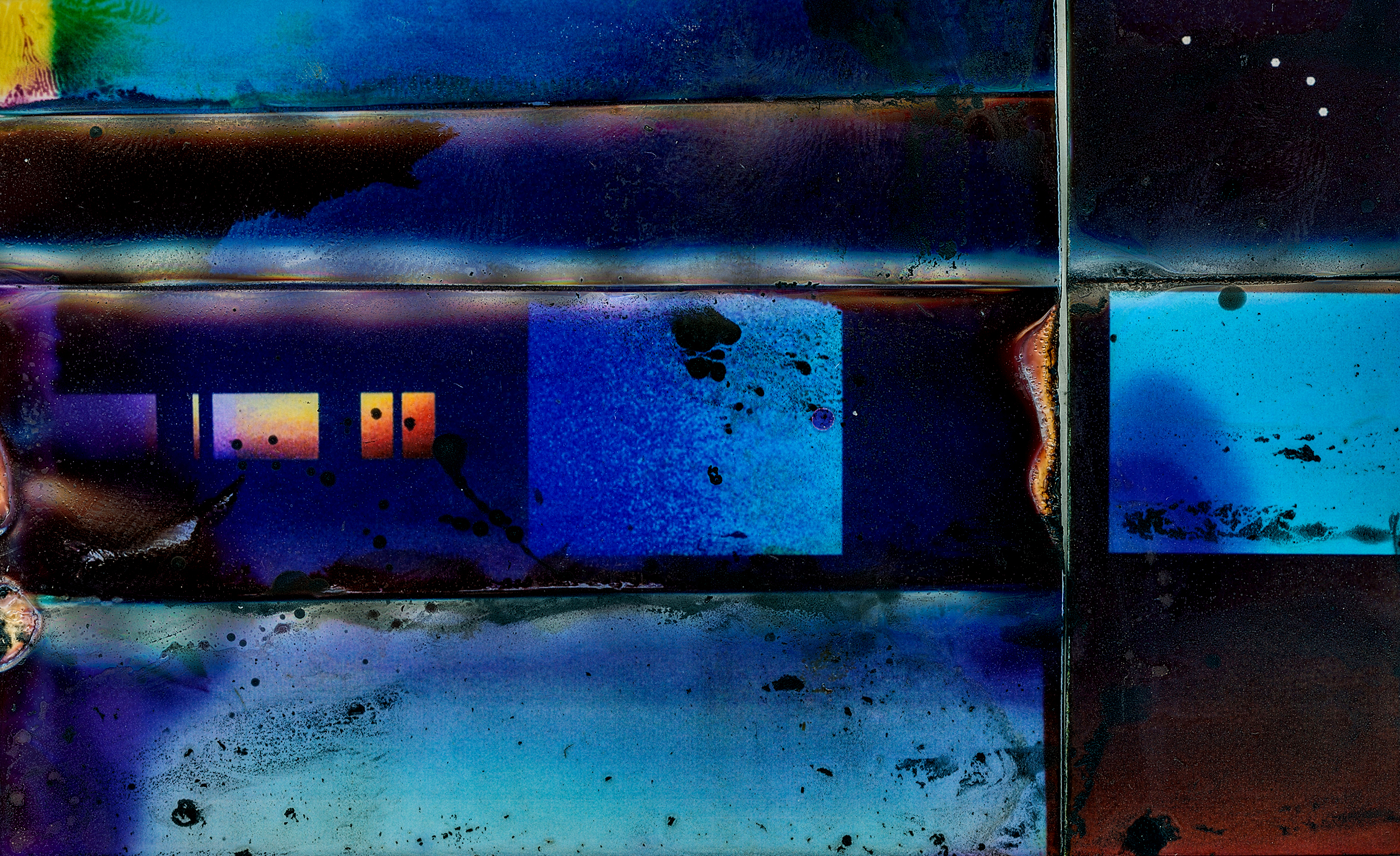
Singapore has been identified as the country with the highest level of light pollution in the world, with the entire city-state registering nine on the Bortle scale. At these levels, 99.5% of the stars in the night sky are obscured.
Having lived in Singapore for more than twenty years, I have become accustomed to a city in which darkness is increasingly difficult to find. The night is continually illuminated by streetlights, construction sites, advertising screens and the glow emanating from homes and commercial buildings. As a photographer, I became interested in the contradiction this presents: photography depends upon light, yet an excess of light can also obscure, interrupt and overwhelm. This led me to consider how photography might do more than simply record artificial light and how the photographic material itself could register and react to its disruptive presence.

The effects of light pollution
While air, water and land pollution are widely recognised, light is less commonly understood as a pollutant. National Geographic has described light pollution as “one of the most chronic environmental perturbations on Earth” as it extends beyond public spaces and into the home where it can disturb sleep patterns and mental wellbeing.
In Search of Dark Skies is a photographic project examining how Artificial Light At Night (ALAN) disrupts these human circadian rhythms in a city-state where true darkness has all but disappeared.
Data collection
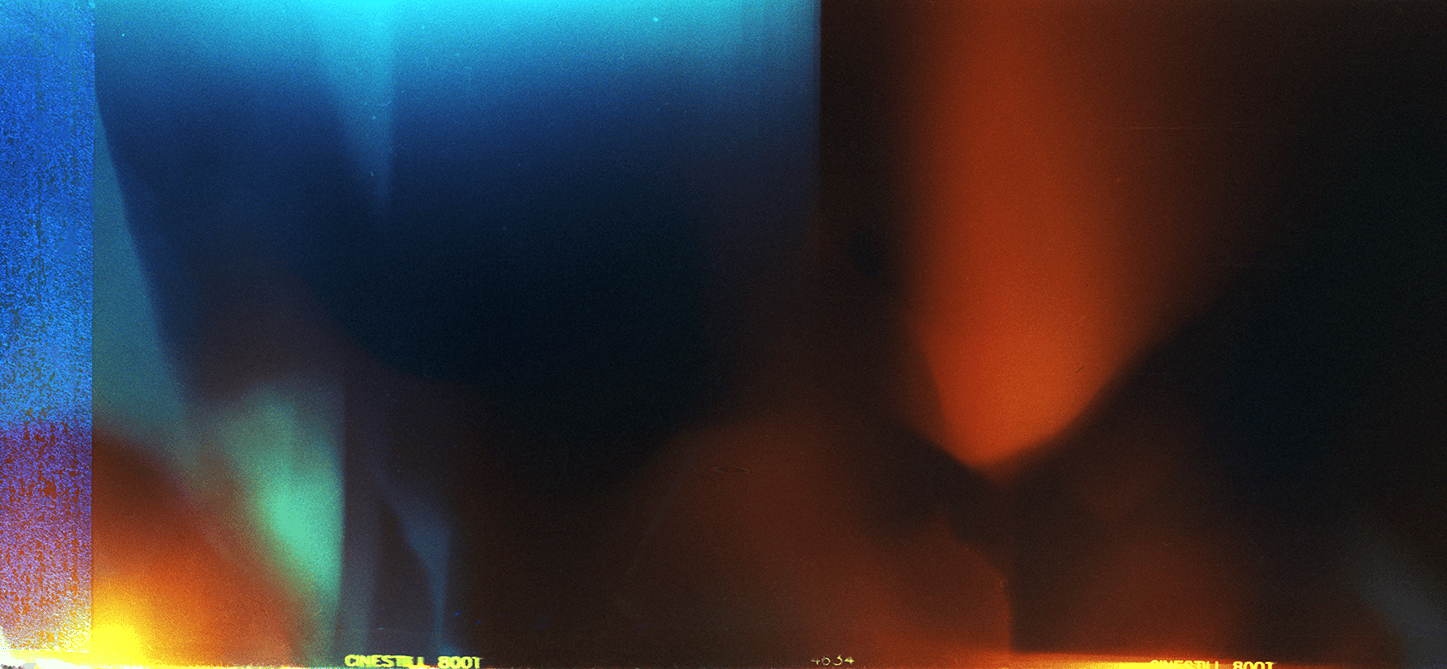
The process for In Search of Dark Skies began with a series of night-time walks through Singapore, photographing artificial light emitted by streetlights, buildings and construction sites. The source images were made using CineStill 800T film and a 6×12 pinhole camera. Long exposures and the unpredictable behaviour of film under low-light conditions produced colour shifts, glare and distortions that became an important part of the work.

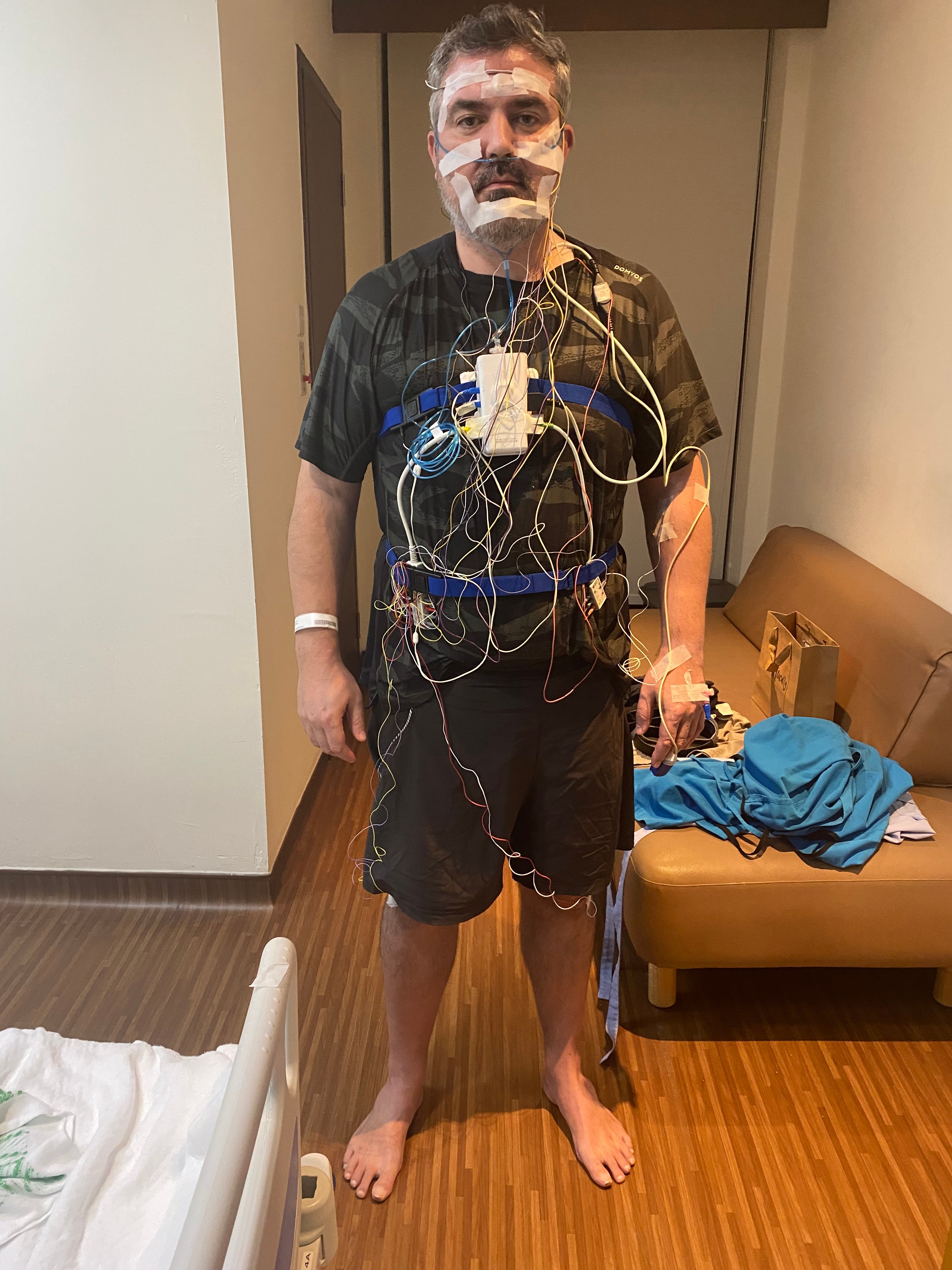
Alongside these photographs, I wired myself up to collect sleep data collected and translated the study results into graphic patterns. These records of duration and interruption were layered into the imagery, together with diagrams of the various star constellations obscured by Singapore’s light pollution.


Authored interference
The resulting compositions were transferred onto Fujifilm Instax Wide film. During its three-minute development period, each print was physically manipulated through folding, tearing, burning and immersion in different solutions (known as instant film soup). Interfering with the image while it was still forming allowed the photographic material to respond unpredictably. Colours separated, surfaces ruptured and recognisable details became partially obscured. Rather than treating these effects as accidental damage, the process uses disruption to draw a material parallel with the intrusion of artificial light into a biological cycle that would otherwise unfold automatically.
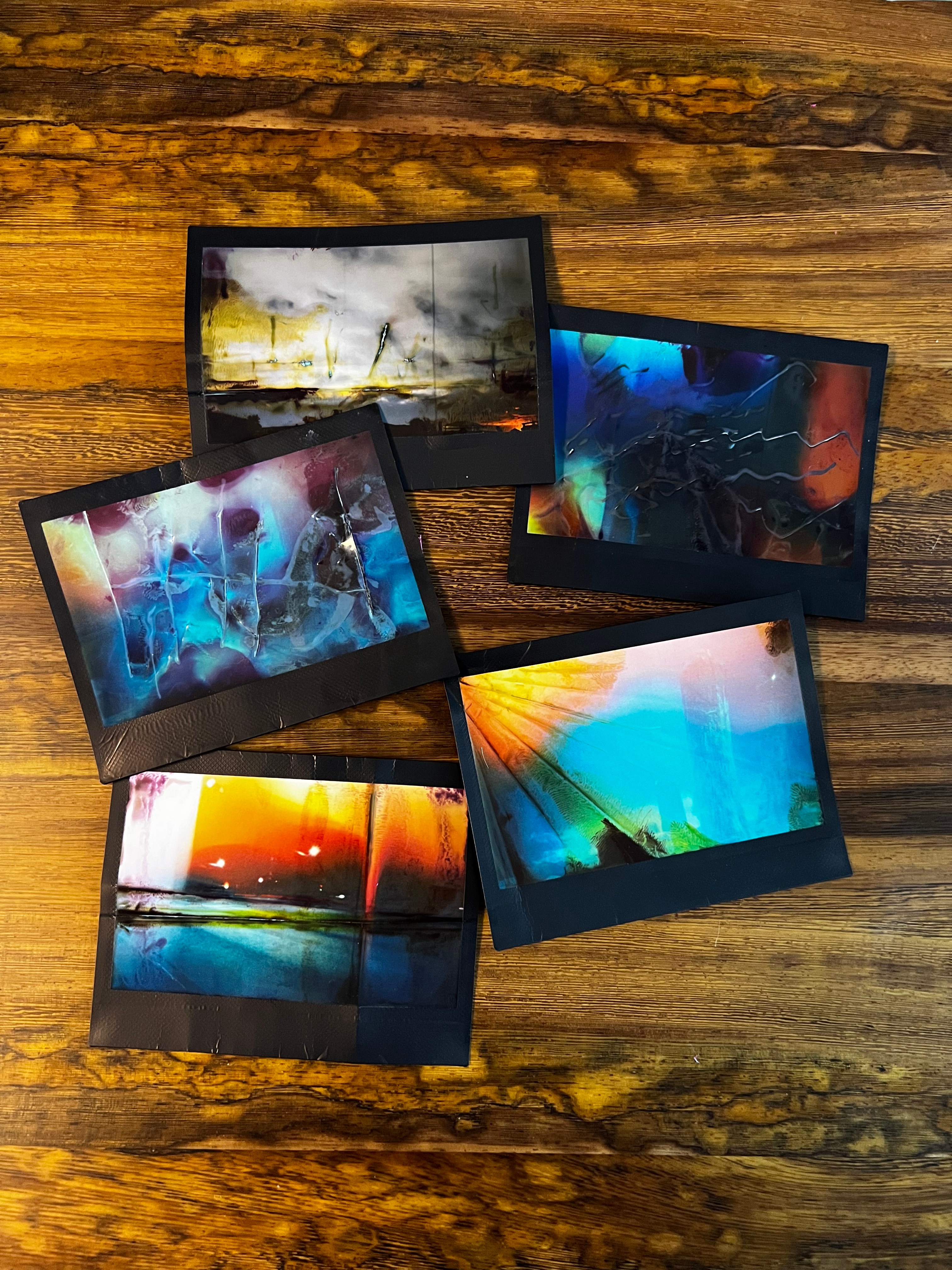
Some prints were subsequently cut apart and rearranged, breaking their original visual sequence and creating fragmented compositions that echo the interrupted sleep patterns. The final images therefore passed through several stages: analogue capture, graphic layering, instant film manipulation, physical resequencing and reconstruction.

Results
The final compositions feel restless and unresolved, translating the psychological effects of light pollution and sleep deprivation into the materiality and language of the photograph.
Beyond these effects on the body, the project responds to a broader cultural loss as darkness recedes from everyday life. National Geographic describes night skies as “the tapestries into which our ancestors wove their star-studded stories, timed the planting and harvesting of crops, and deduced the physical laws governing the cosmos”. Under Singapore’s persistent glow, this shared field of observation, knowledge and imagination has become increasingly difficult to access.


The work was ultimately assembled as a large-format, section-sewn photobook. Its dense sequencing leaves little visual breathing space, extending the project’s sense of saturation and interrupted rest into the act of viewing. Several images were printed on transparent film and placed loose within the book, inviting readers to remove them and hold them against an artificial light source.
In its final form, photography operates not only as a means of recording light, but as a physical material to be exposed, disturbed and reassembled.


To view more or Rob’s work please visit:
www.robdavies.photography
https://www.instagram.com/rob_daviesphotography
DRAKE, N. 2019. Our Nights Are Getting Brighter, And Earth Is Paying The Price. Available at: https://www.nationalgeographic.com/science/2019/04/nights-are-getting-brighter-earth-paying-thepricelight-pollution-dark-skies [accessed 28 August 2023].
BORTLE, John E. 2001. Gauging Light Pollution: The Bortle Dark-Sky Scale. Sky & Telescope. Sky Publishing Corporation [accessed 29 August 2023].


Leave your thoughts